Plant Look & Feel
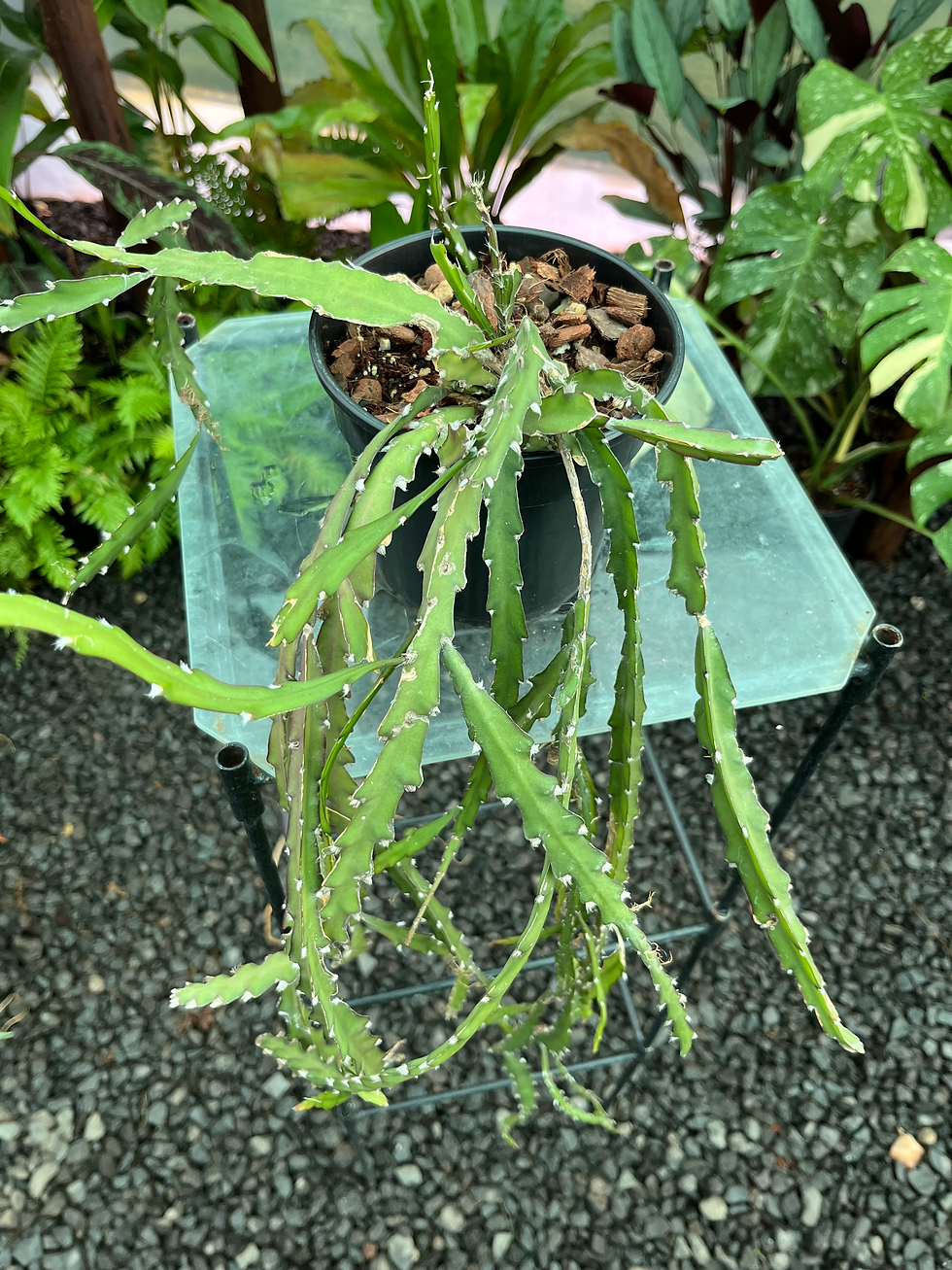
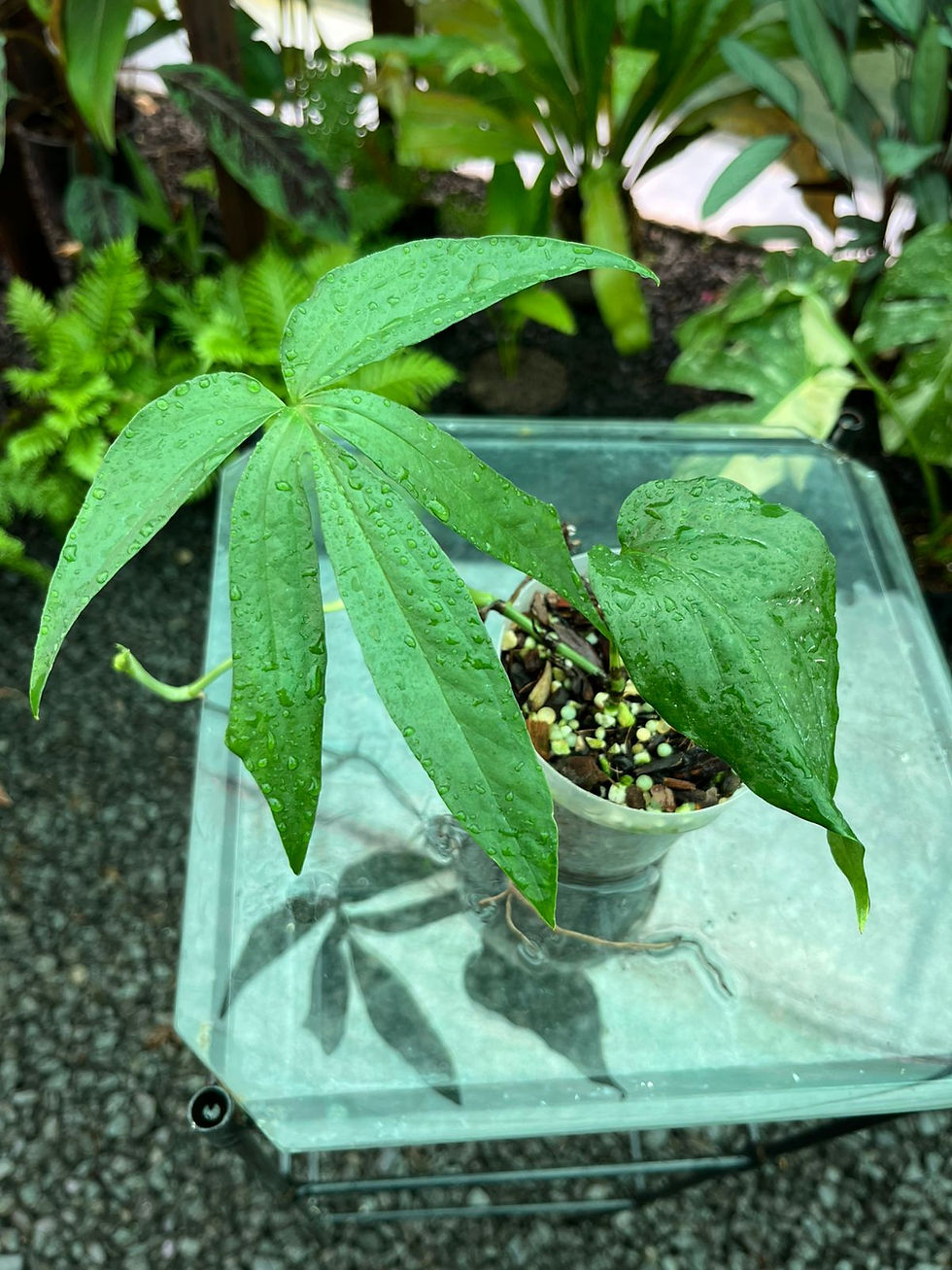
Alocasia Cleopatra carries an unmistakable regal presence. Its elongated, shield-like leaves are deep green with dramatic, contrasting veins and a softly satin finish. The leaf undersides often reveal rich, darker tones, adding depth and intrigue from every angle. Upright and elegant, this plant feels poised and commanding — a statement piece that brings both structure and mystery into a space.
Care Guide
Light:
Bright, indirect light is ideal. Too much direct sun can scorch the leaves, while low light may reduce growth and leaf definition.Water:
Water when the top few centimetres of soil have dried. Keep the soil lightly moist but never waterlogged. Alocasias are sensitive to overwatering.Humidity:
High humidity is preferred. While it can adapt to average indoor humidity, it truly thrives with added moisture in the air.Temperature:
Best grown in warm conditions between 18–28°C. Avoid cold drafts, heaters, and sudden temperature fluctuations.Soil:
A well-draining, airy aroid mix is essential — combine bark, perlite, and coco peat or peat moss for healthy roots.
Pet & Reptile Safety
Not pet or reptile safe
Alocasia Cleopatra is toxic to cats, dogs, and reptiles if ingested. It contains calcium oxalate crystals that can cause irritation and discomfort. Keep out of reach of pets and away from reptile enclosures.
Quick Care Tips
Bright, filtered light keeps foliage strong
Allow soil to dry slightly between waterings
High humidity = healthier, larger leaves
Keep warm and avoid frequent repositioning
Troubleshooting
Yellowing leaves:
Often a sign of overwatering or poor drainage. Check soil moisture and ensure the pot drains freely.
Drooping leaves:
Can indicate underwatering, cold stress, or sudden environmental changes.
Brown edges or tips:
Usually caused by low humidity or inconsistent watering.
Leaf drop after moving or repotting:
Alocasias can be sensitive to change. Maintain stable care and patience — new growth usually follows.