Plant Look & Feel
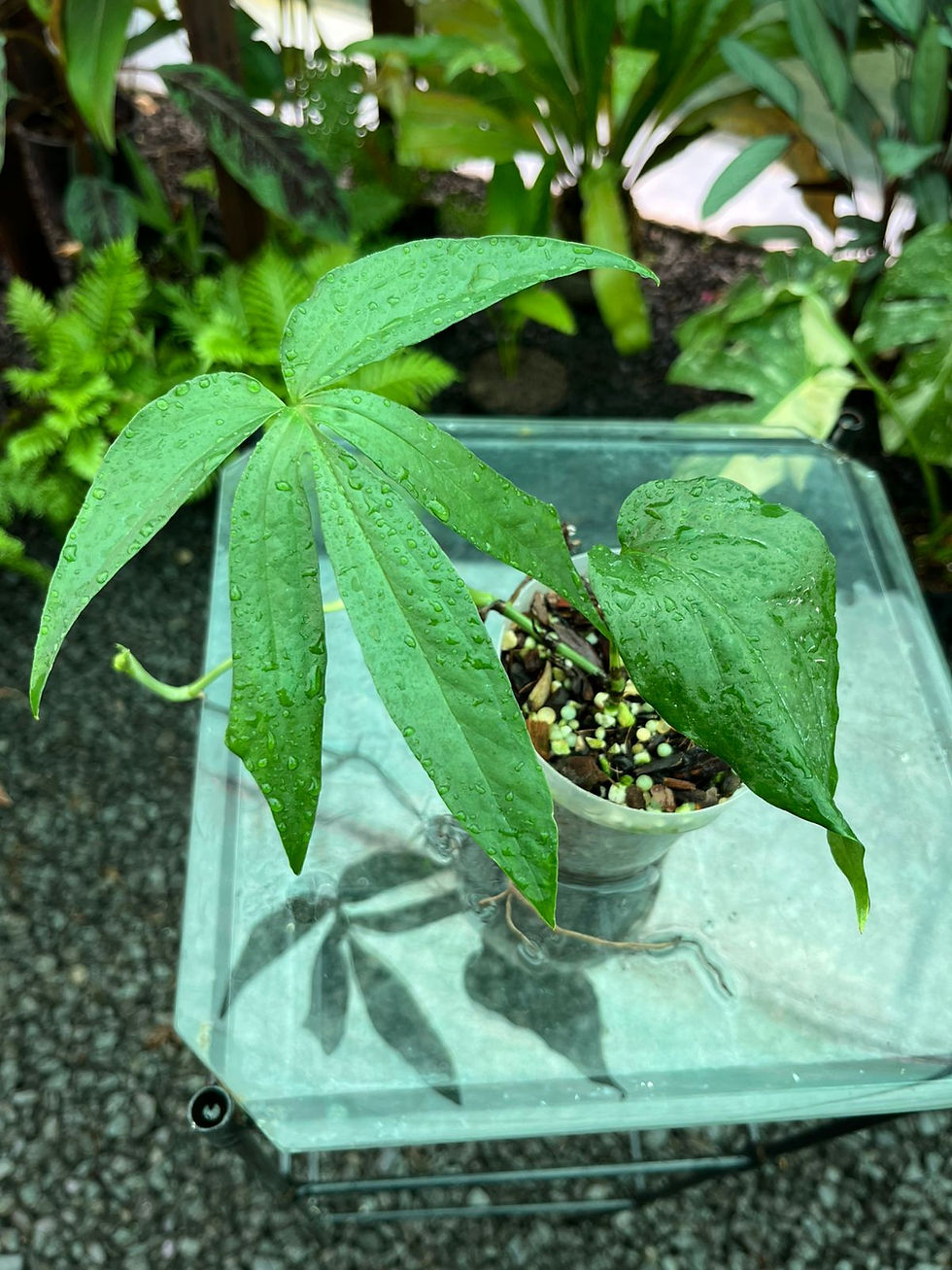
Alocasia Stingray is a true conversation piece. Its large, glossy green leaves are shaped like a stingray in motion, complete with a long, tapered “tail” extending elegantly from each leaf tip. The upright stems and dramatic silhouette give this plant a playful yet sculptural presence — bold, expressive, and unlike anything else in a plant collection. It feels alive with movement, even when still.
Care Guide
Light:
Bright, indirect light is ideal. Gentle morning sun is fine, but harsh direct light can burn the leaves and tails.Water:
Water when the top few centimetres of soil are dry. Keep the soil lightly moist but never soggy. Alocasias prefer consistency and good drainage.Humidity:
High humidity is strongly recommended. This plant thrives in humid environments and will reward you with larger, healthier leaves.Temperature:
Prefers warm conditions between 18–30°C. Protect from cold drafts, air conditioning, and sudden temperature drops.Soil:
Use a well-draining aroid mix with bark, perlite, and coco peat or peat moss to ensure airflow around the roots.
Pet & Reptile Safety
Not pet or reptile safe
Alocasia Stingray is toxic to cats, dogs, and reptiles if ingested. It contains calcium oxalate crystals that can cause irritation and discomfort. Keep well out of reach of pets and away from reptile enclosures.
Quick Care Tips
Bright, indirect light keeps leaf shape defined
High humidity encourages strong “tails”
Avoid overwatering — drainage is essential
Do not move frequently; this plant likes stability
Troubleshooting
Leaves drooping:
Often caused by underwatering, cold stress, or sudden environmental changes.
Yellowing leaves:
Typically a sign of overwatering or poor drainage. Check roots and soil moisture.
Brown tips or edges:
Usually due to low humidity or inconsistent watering.
Tail growth slowing or deforming:
May indicate insufficient light or humidity. Increase brightness and moisture in the air.