
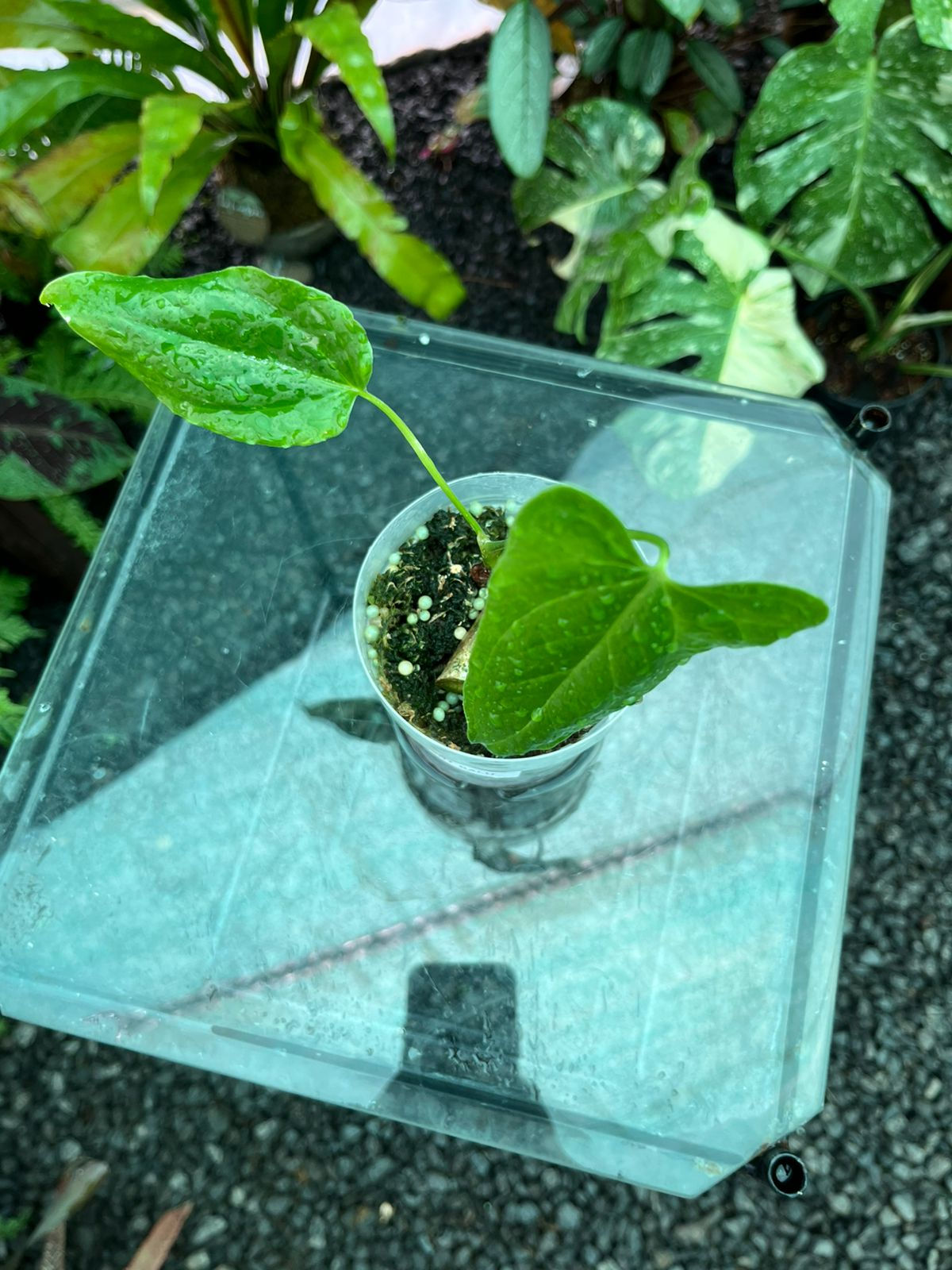

Elegant, bold, and undeniably architectural, Anthurium balaoanum is a rare strap-leaf Anthurium prized for its long, narrow, cascading foliage. Its deep green leaves are leathery and elongated, flowing downward in dramatic ribbons that give the plant a wild, jungle-grown presence. Unlike glossy heart-leaf Anthuriums, balaoanum feels sculptural and mature—perfect for collectors who love statement foliage over flowers.
This species is especially striking when grown in a hanging basket or elevated planter, where its leaves can drape freely.
What It Looks Like
Long, strap-shaped leaves with a deep green, leathery texture
Cascading, downward growth habit
Subtle veining that adds depth and structure
Architectural, minimalist, and dramatic
Grows fuller and longer with maturity
It feels ancient and tropical—like something found clinging to a rainforest canopy.
Care Guide
Anthurium balaoanum thrives with consistent care and good airflow around its roots.
Light
Bright, indirect light is ideal
Tolerates medium light, but growth slows
Avoid direct sun, which can scorch leaves
Water
Water when the top 3–5 cm of medium is dry
Likes evenly moist conditions, never soggy
Reduce watering during cooler months
Soil / Medium
Very well-draining, airy mix (orchid bark, perlite, coco coir or sphagnum)
Can be grown in semi-hydro or mounted setups
Roots must breathe
Humidity & Temperature
Prefers high humidity
Thrives in warm, stable indoor conditions
Avoid cold drafts and dry air
Pet Safe & Reptile Safe
Not pet-safe
Anthurium contains calcium oxalate crystals
Toxic to cats, dogs, and small animals if ingested
Can cause mouth irritation, drooling, and digestive upset
Reptile safety:
Not recommended for reptile enclosures
Display out of reach of pets and animals.
Quick Care Tips
Bright indirect light keeps leaves long and healthy
Prioritise airflow and drainage over frequent watering
High humidity = happier foliage
Let leaves cascade naturally for best visual impact
Wipe leaves gently to keep them dust-free
Troubleshooting
Yellowing leaves
→ Overwatering or poor drainage
→ Improve airflow and allow medium to dry slightly
Brown edges or tips
→ Low humidity or mineral buildup
→ Increase humidity and use filtered water if possible
Slow growth
→ Low light or compacted medium
→ Increase light and refresh growing mix
Drooping leaves
→ Underwatering or temperature stress
→ Water thoroughly and check environment stability


