Hoya clemensiorum
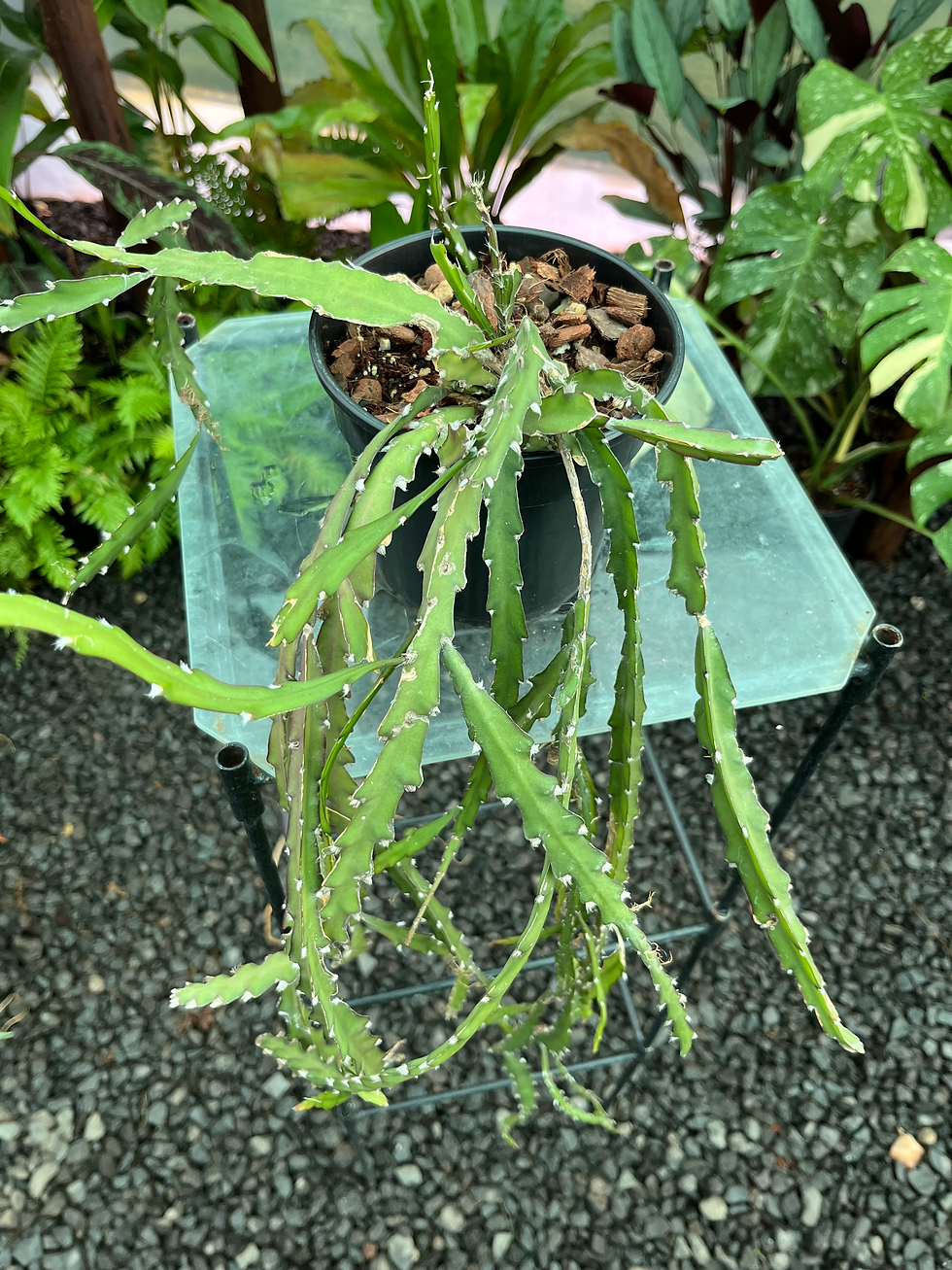
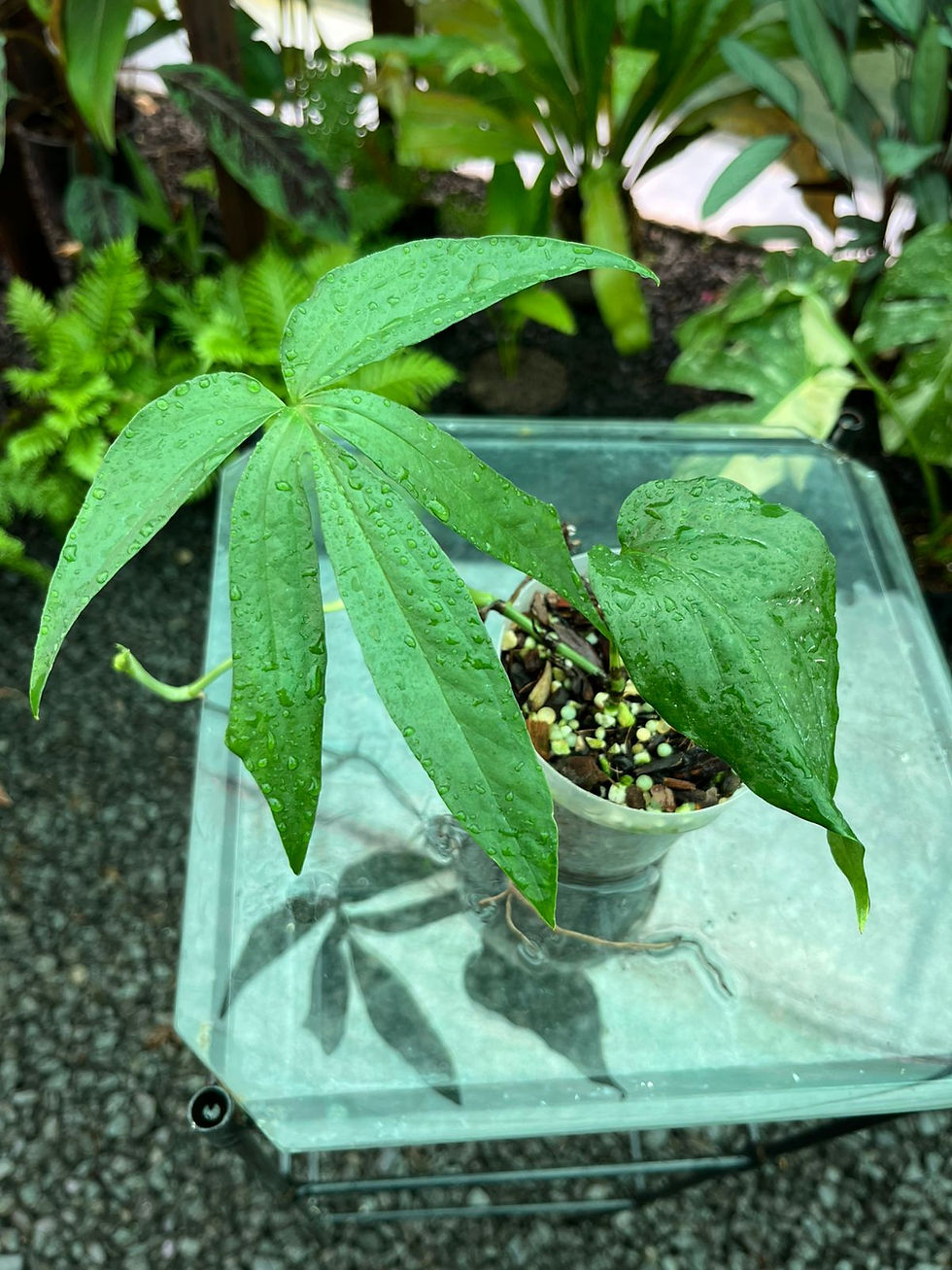
Bold and architectural, Hoya clemensiorum is a statement plant for those who love foliage with presence. Its long, narrow leaves are thick and leathery, deeply textured with dramatic veining that gives them a rippled, almost sculpted appearance. Dark green tones are often contrasted by lighter veins, creating a striking, high-impact look even when the plant is young.
This is not a delicate Hoya. It feels strong, intentional, and quietly commanding—perfect for collectors and design-led spaces alike.
What It Looks Like
Long, strap-like leaves with a deeply bullated (textured) surface
Prominent veining that creates a ribbed, sculptural effect
Deep green foliage, sometimes with lighter vein contrast
Upright to climbing growth habit with thick stems
It looks almost carved rather than grown—bold, tactile, and unforgettable.
Care Guide
Hoya clemensiorum is resilient when its epiphytic nature is respected.
Light
Bright, indirect light is ideal
Can tolerate some gentle direct morning sun
Too little light slows growth significantly
Water
Allow most of the soil to dry between waterings
Thick leaves store water—overwatering is the biggest risk
Water less in winter
Soil
Very well-draining, airy mix
Orchid bark, perlite, and a small amount of potting mix work well
Roots need airflow more than constant moisture
Humidity & Temperature
Enjoys moderate to high humidity
Thrives in warm, stable indoor conditions
Avoid cold drafts and sudden temperature drops
Pet Safe & Reptile Safe
Use with caution
Hoyas are considered mildly toxic to pets (cats and dogs) if ingested
Sap may cause mild stomach upset or irritation
Reptile safety:
Not recommended for reptile enclosures
Best used as a decorative plant outside animal habitats
If pets are prone to chewing plants, keep this one out of reach.
Quick Care Tips
Bright light supports strong leaf texture
When unsure, wait before watering
Firm, heavy leaves = healthy plant
Provide a support as it matures
Growth is slow and intentional—this is normal
Troubleshooting
Yellowing leaves
→ Overwatering or poor drainage
→ Allow soil to dry more and improve airflow
Soft or wrinkled leaves
→ Underwatering or root stress
→ Water thoroughly and check root health
Slow or no growth
→ Light too low
→ Move to a brighter indirect position
Blackened stem base
→ Early root rot
→ Reduce watering immediately and repot if necessary