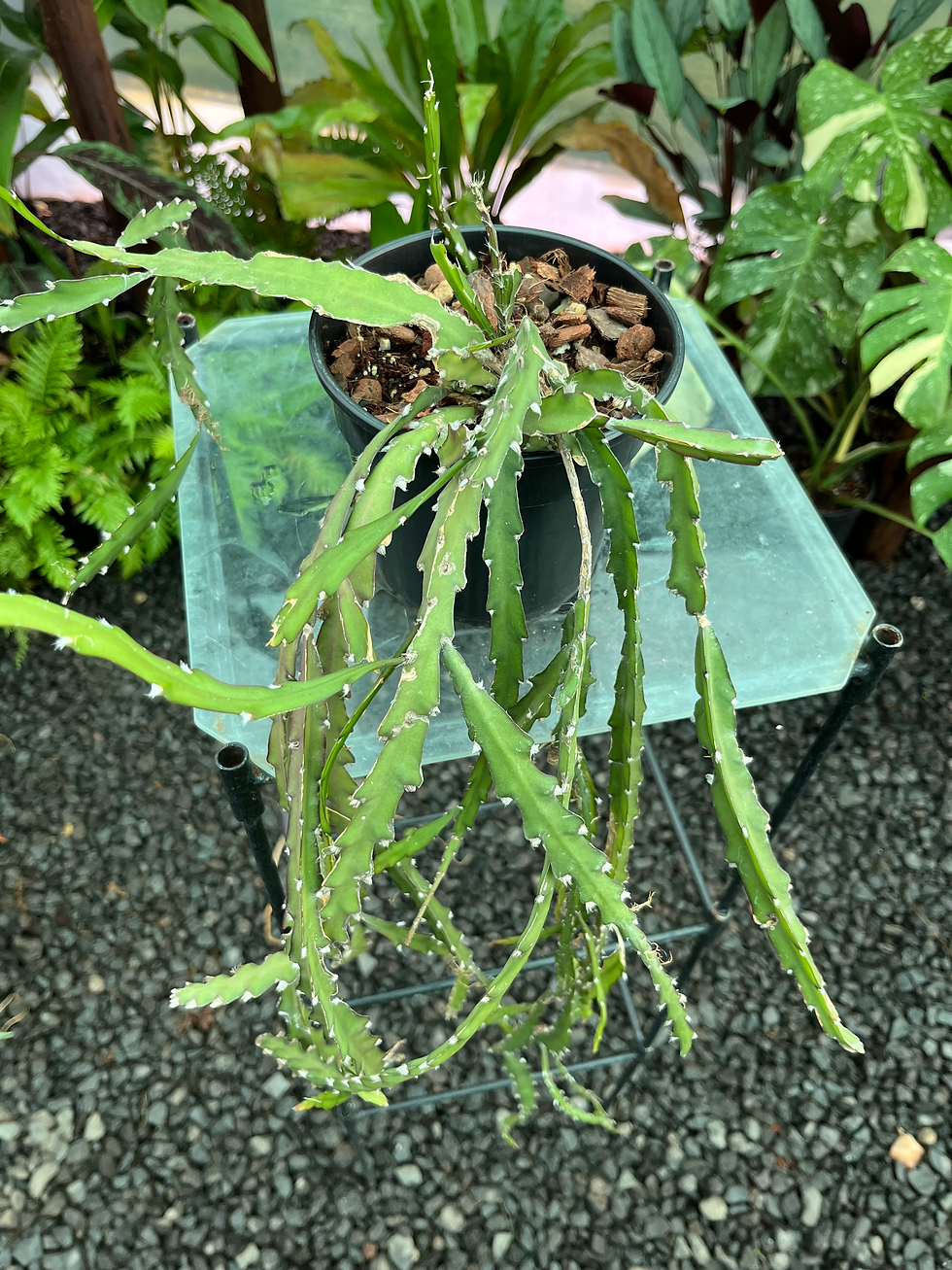
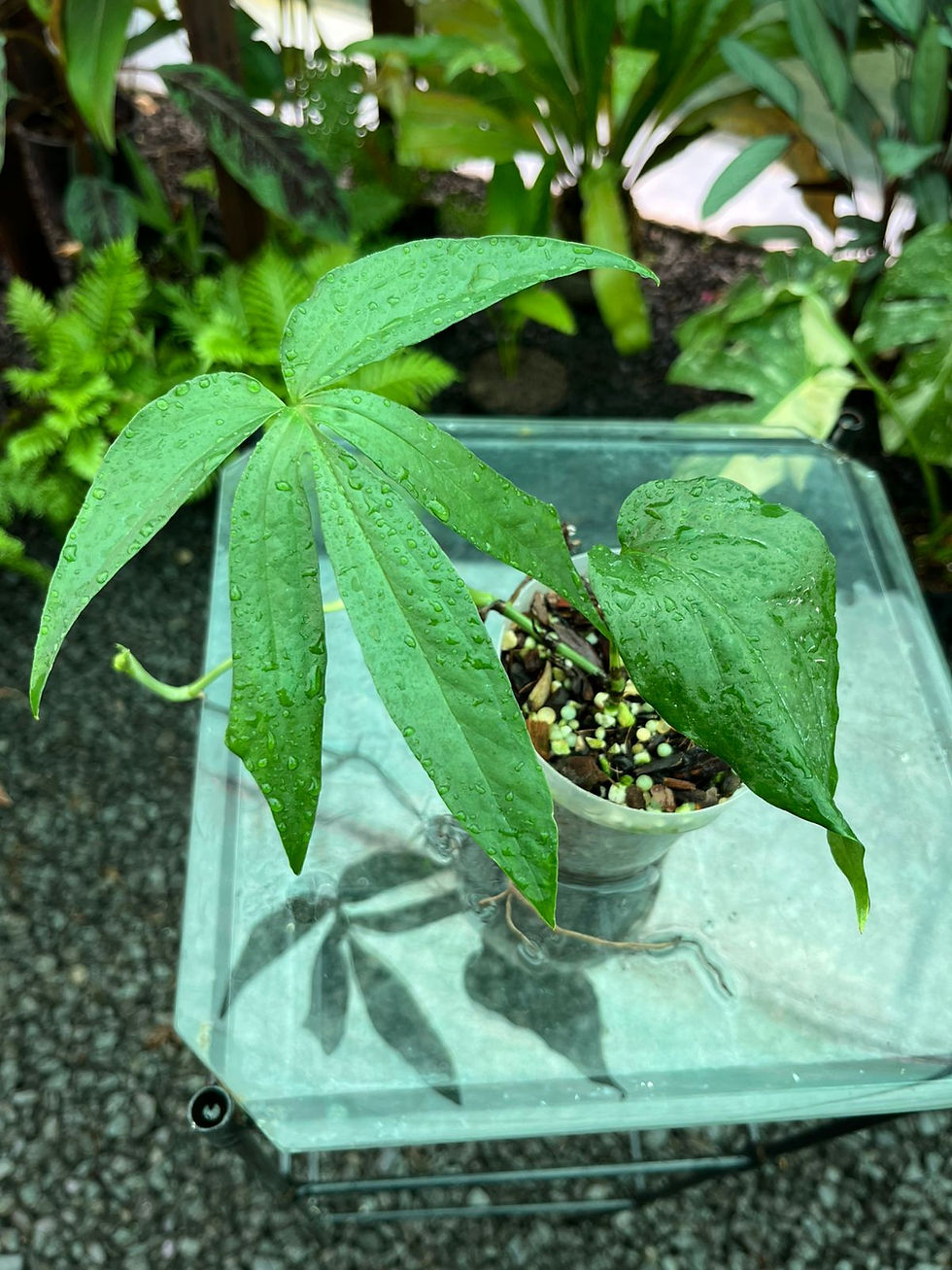
Charming, textured, and full of character, Hoya krinkle is a trailing beauty for plant lovers who appreciate subtle drama. Its small, crinkled leaves grow densely along trailing stems, giving the plant a soft, sculptural appearance.
Often deep green with a waxy finish, it creates a rich, lush cascade in hanging baskets or climbing displays.
When happy, Hoya krinkle produces clusters of tiny star-shaped flowers, adding delicate fragrance and charm to its textured foliage.
What It Looks Like
Small, crinkled, waxy leaves with a deep green hue
Dense trailing stems that create a full, cascading effect
Clusters of pale, star-shaped flowers when mature
Compact and versatile, ideal for hanging baskets or shelf displays
Its unique leaf texture makes it stand out in any collection, soft and tactile yet visually intriguing.
Care Guide
Hoya krinkle is forgiving and thrives with consistent, mindful care.
Light
Bright, indirect light is ideal
Can tolerate medium light, though growth slows
Avoid harsh direct sunlight
Water
Allow top half of soil to dry between waterings
Thick leaves store water; overwatering is the main risk
Reduce watering during winter
Soil
Well-draining, airy mix (perlite + orchid bark + light potting mix)
Roots prefer airflow
Humidity & Temperature
Prefers moderate to high humidity
Thrives in warm, stable indoor temperatures
Protect from cold drafts
Pet Safe & Reptile Safe
Use with caution
Hoya krinkle is mildly toxic to cats and dogs if ingested
Sap may cause mild stomach upset or irritation
Reptile safety:
Not recommended for reptile enclosures
Best used as a decorative plant outside animal habitats
Quick Care Tips
Bright light keeps leaves crisp and healthy
Water only when topsoil is dry
Provide support for climbing or let it trail
Rotate occasionally for even growth
Flowers appear with maturity and proper light
Troubleshooting
Yellowing leaves
→ Overwatering or poor drainage
→ Allow soil to dry and improve airflow
Leggy growth
→ Light too low
→ Move to brighter, indirect light
Wrinkled or soft leaves
→ Underwatering
→ Water thoroughly and check root moisture
No flowers
→ Plant still maturing or insufficient light
→ Increase bright indirect light and remain patient