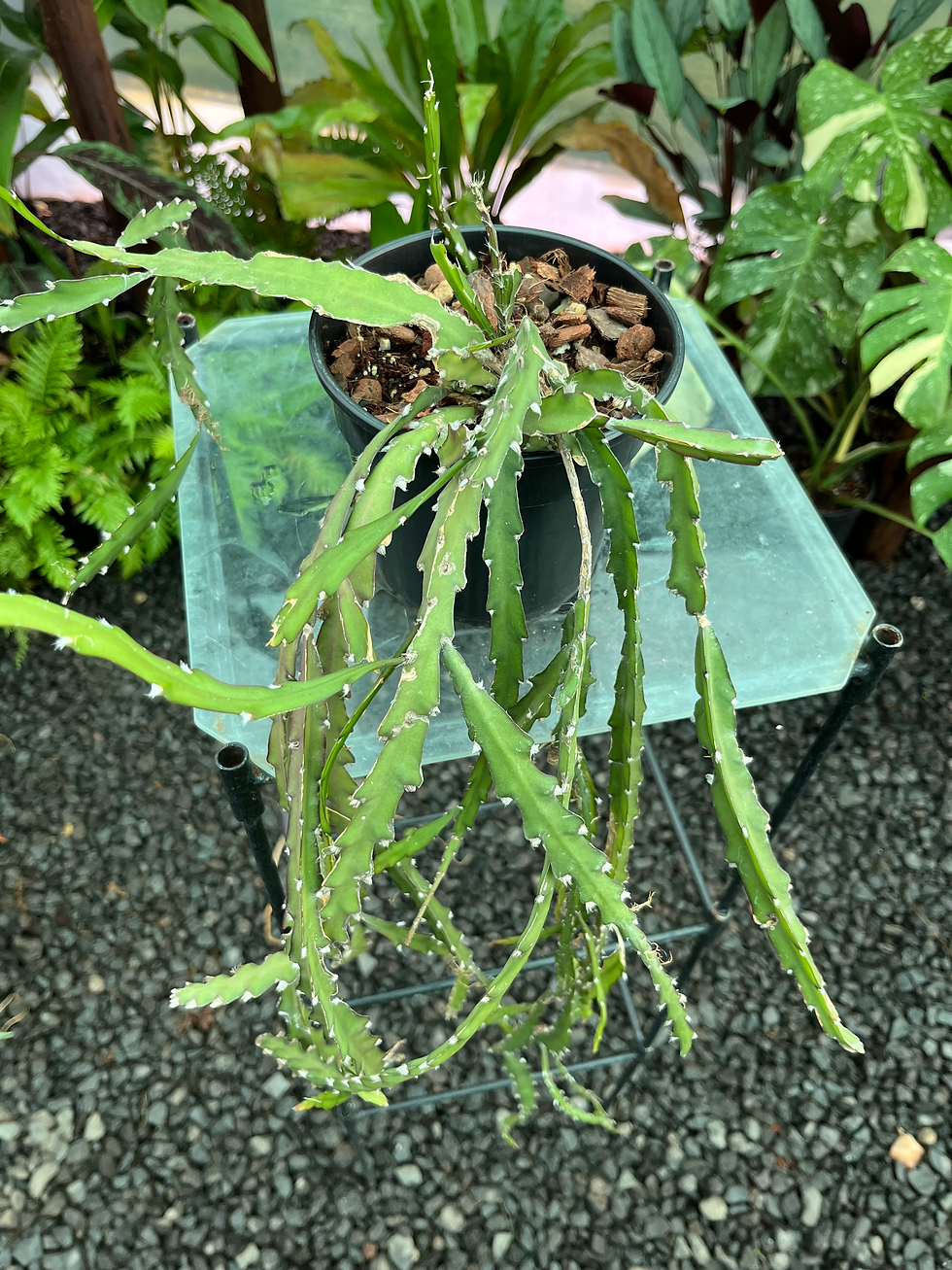
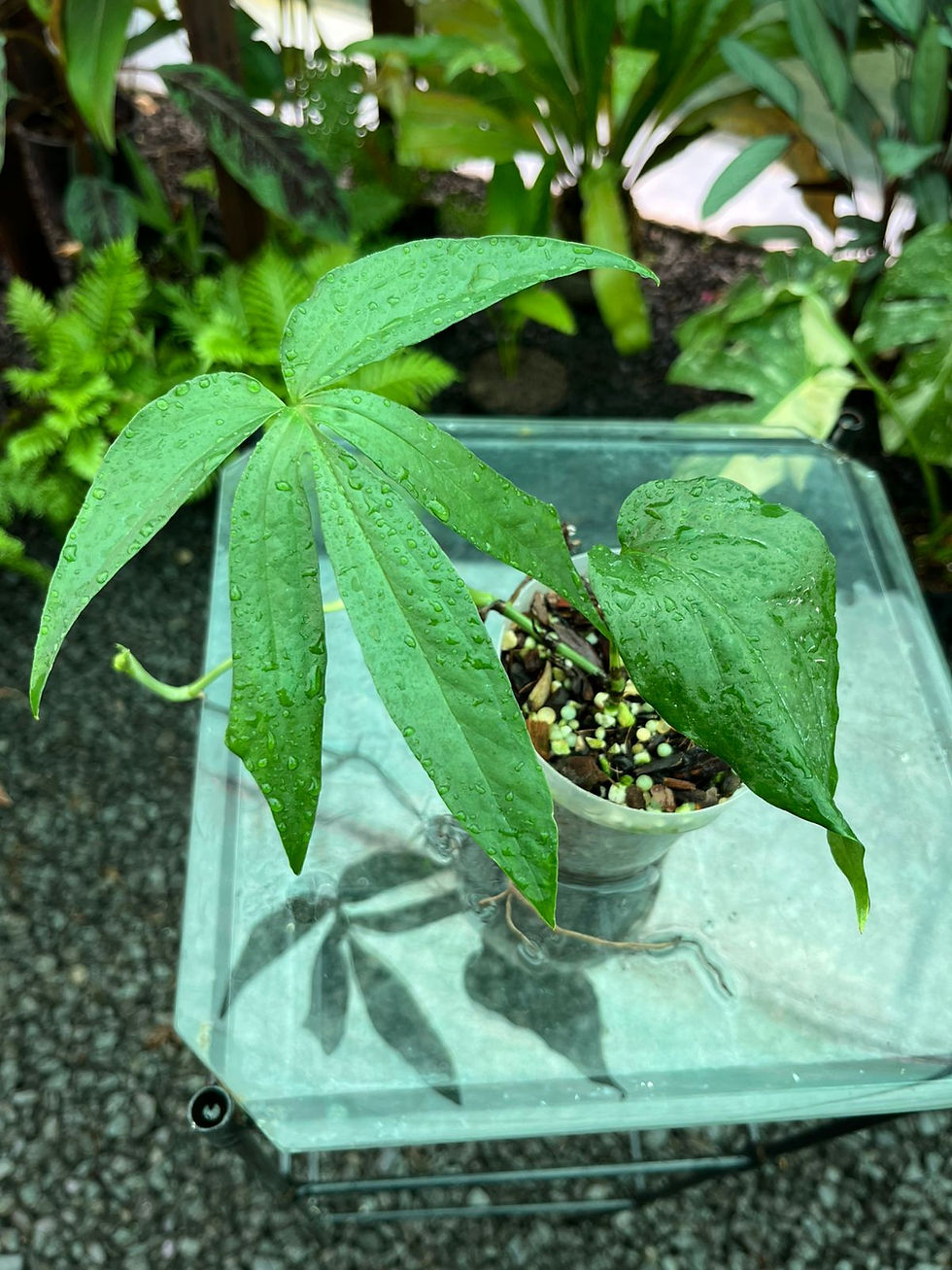
Elegant, wispy, and ethereal, Hoya linearis is a plant that feels like a soft cascade of green threads. Its long, narrow, strap-like leaves drape gracefully from trailing stems, creating a light, airy texture that’s perfect for hanging baskets or high shelves. This Hoya is loved for its understated beauty and, when mature, produces clusters of tiny, fragrant, star-shaped flowers that add a subtle floral charm.
 What It Looks Like
Long, slender, trailing leaves resembling soft green ribbons
Dense cascading growth habit
Clusters of delicate, star-shaped, fragrant flowers when mature
Airy, lightweight form perfect for shelves or hanging displays
Its flowing, thread-like foliage makes it a standout trailing plant with a gentle presence.
Care Guide
Hoya linearis is relatively low-maintenance and thrives with consistent, careful care.
Light
Bright, indirect light is ideal
Can tolerate some medium light, but growth slows in low light
Avoid harsh direct sunlight
Water
Allow top layer of soil to dry between waterings
Overwatering is the main concern
Reduce watering during winter
Soil
Well-draining, airy mix (perlite + orchid bark + light potting mix)
Roots need airflow, not constant moisture
Humidity & Temperature
Prefers moderate to high humidity
Thrives in warm, stable indoor conditions
Protect from cold drafts
Pet Safe & Reptile Safe
Use with caution
Hoya linearis is mildly toxic to cats and dogs if ingested
Sap may cause mild irritation or digestive upset
Reptile safety:
Not recommended for reptile enclosures
Best used as a decorative trailing plant outside habitats
Quick Care Tips
Bright indirect light keeps foliage full and healthy
Let soil mostly dry before watering
Rotate occasionally for even growth
Provide hanging support or allow to trail naturally
Flowers appear with maturity, patience, and proper light
Troubleshooting
Yellowing leaves
→ Overwatering or poor drainage
→ Allow soil to dry and improve pot drainage
Leggy growth
→ Low light
→ Move to brighter indirect light
Soft or limp leaves
→ Underwatering
→ Water thoroughly and check soil moisture
No flowers
→ Plant still maturing or insufficient light
→ Increase bright indirect light and remain patient