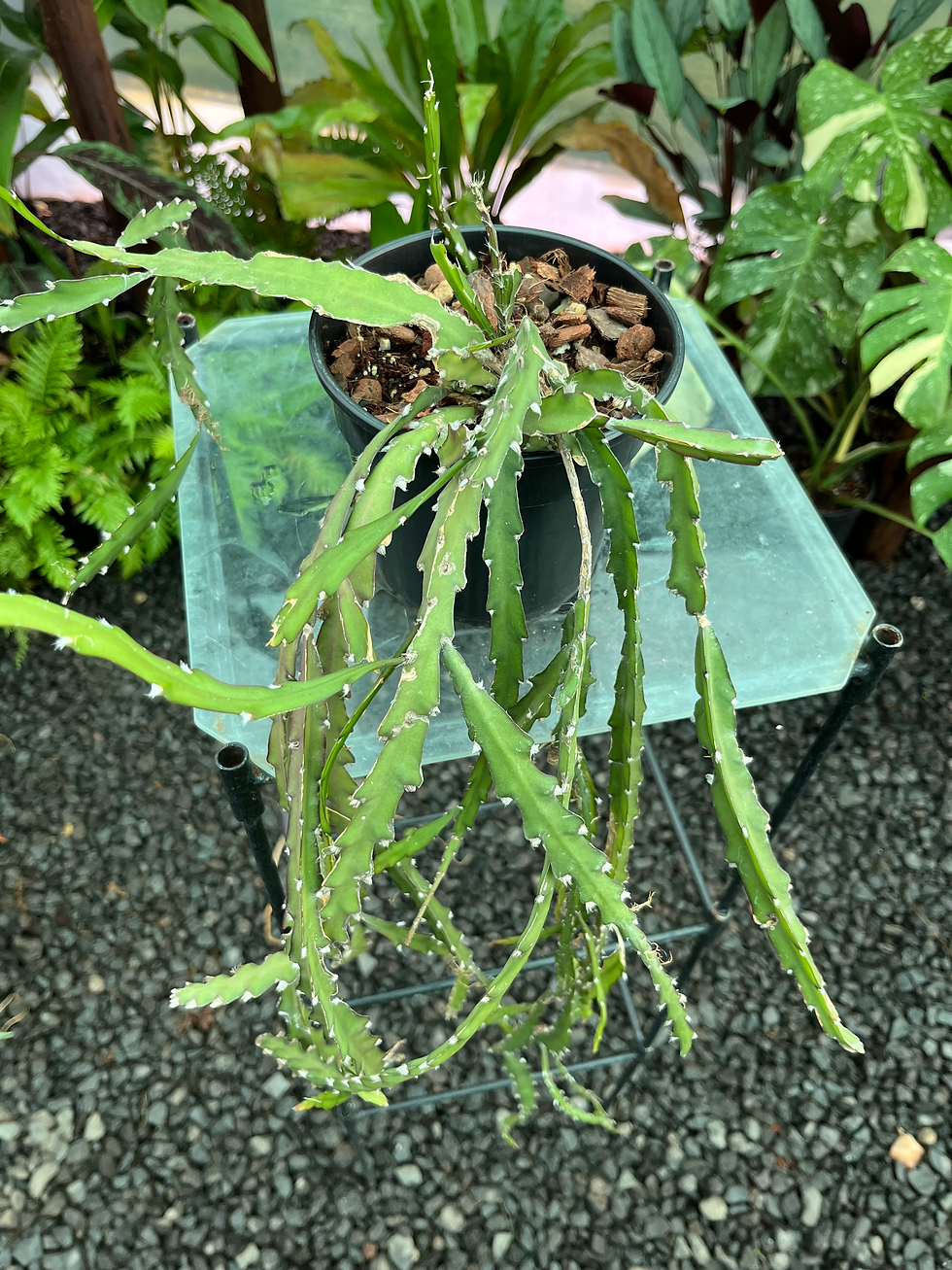
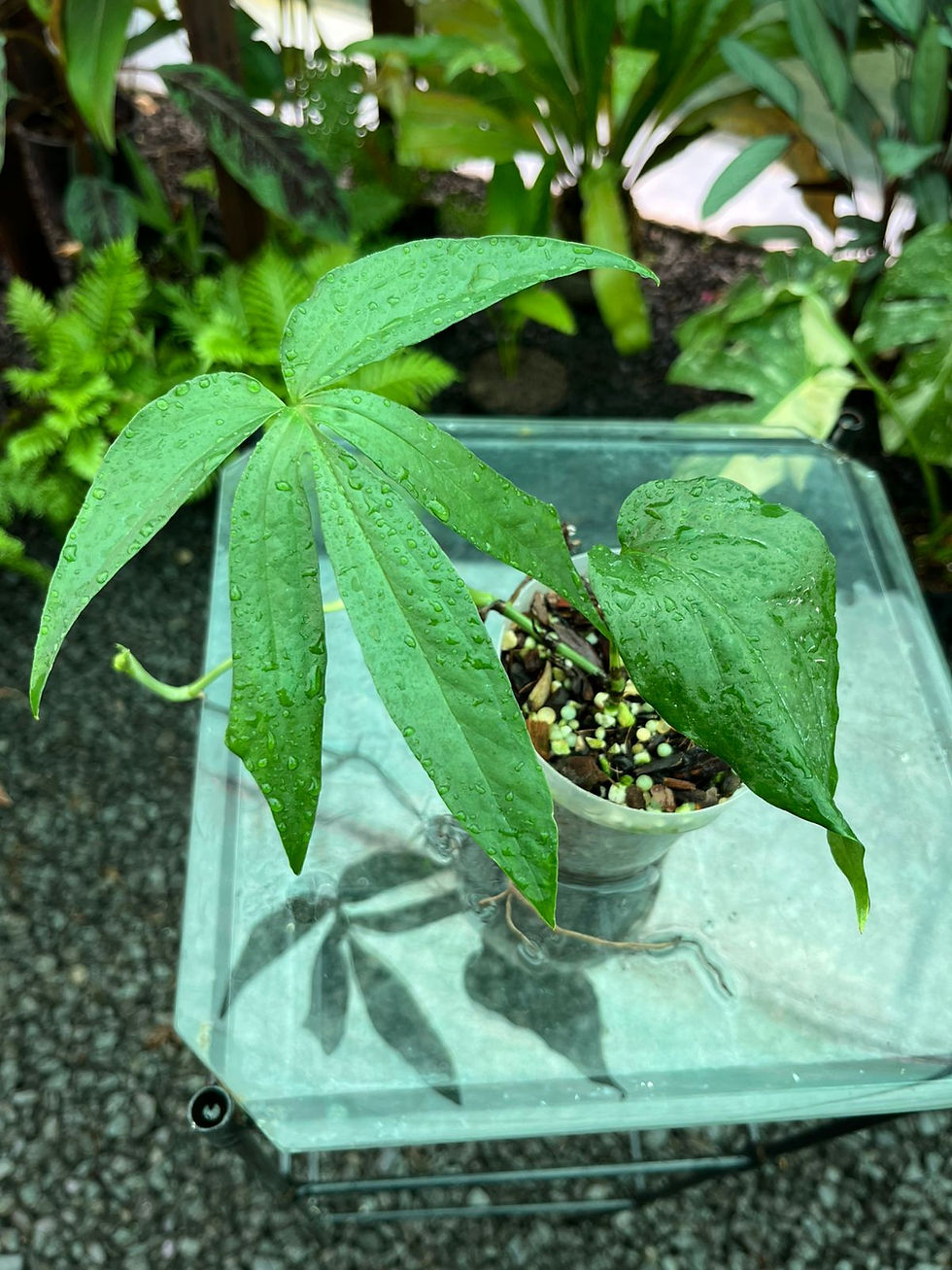
Exotic, striking, and full of personality, Syngonium ‘Ngern La Mai’ is a show-stopping indoor plant. Its arrow-shaped leaves display a unique marbled pattern of deep green with silver or light green streaks, giving each leaf a sculptural, textured appearance. With a compact yet trailing habit, it is perfect for shelves, desks, or moss poles, adding a touch of tropical elegance to any space.
 What It Looks Like
Arrow-shaped leaves with marbled green and silver/light green patterns
Glossy, slightly waxy foliage
Compact, trailing, or climbing habit
Each leaf is unique, creating a living piece of natural art
Its textured and patterned foliage makes it a focal point for collectors and tropical plant enthusiasts alike.
Care Guide
Syngonium ‘Ngern La Mai’ is adaptable and beginner-friendly when given consistent care.
Light
Bright, indirect light highlights marbling and patterns
Can tolerate medium light, but colors may fade
Avoid harsh direct sunlight
Water
Water when the top 2–3 cm of soil is dry
Keep soil evenly moist but never waterlogged
Reduce watering during winter
Soil
Well-draining mix (potting soil + perlite + orchid bark)
Roots require airflow
Humidity & Temperature
Prefers moderate to high humidity
Thrives in warm, stable indoor temperatures
Protect from cold drafts
Pet Safe & Reptile Safe
Not pet-safe
Syngonium contains calcium oxalate crystals
Toxic to cats, dogs, and small animals if ingested
Can cause mouth irritation, drooling, or mild digestive upset
Reptile safety:
Not recommended for terrariums or enclosures
Quick Care Tips
Bright indirect light keeps leaf marbling vibrant
Allow soil to partially dry between waterings
Provide support for climbing if desired
Rotate occasionally for even growth
Trim occasionally to maintain shape and encourage bushiness
Troubleshooting
Yellowing leaves
→ Overwatering or poor drainage
→ Allow soil to dry and ensure proper drainage
Leggy growth
→ Low light
→ Move to brighter indirect location
Brown leaf tips
→ Low humidity or inconsistent watering
→ Increase humidity and water evenly
Faded patterns
→ Insufficient light
→ Gradually increase bright indirect light